Shaping the future of aviation
Mindful of its environmental, social and governance (ESG) responsibilities, Genève Aéroport places sustainability at the core of its strategy.


Genève Aéroport is implementing its 2030 sustainability strategy based on three priority commitments covering environmental, social and governance (ESG) aspects, setting ambitious targets.
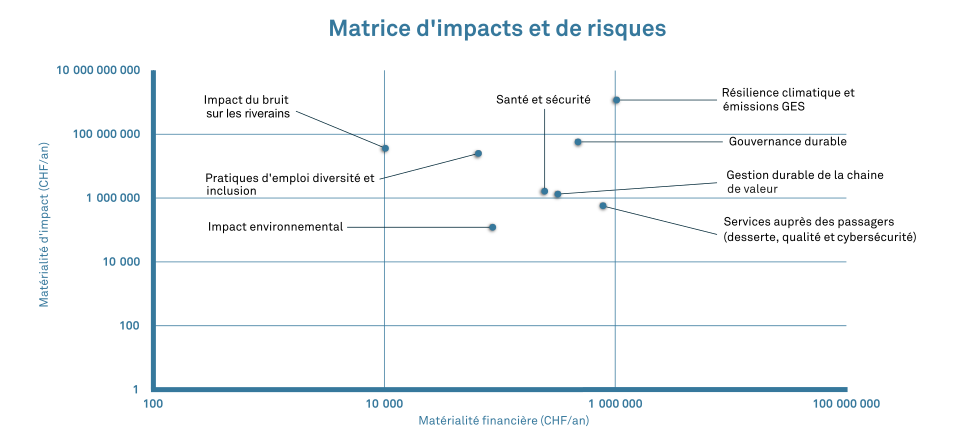
These priority commitments are based on the results of the double materiality assessment conducted in 2025. This assessment helps identify both our key issues and those of our stakeholders.

Reducing our carbon footprint: reduce greenhouse gas (GHG) emissions across the entire airport platform by 90% by 2037, and actively contribute, alongside the aviation industry, to achieving a 90% reduction in GHG emissions by 2050.
Reducing our carbon footprint
Noise management: reduce the area exposed to aircraft noise by 20% by 2030.

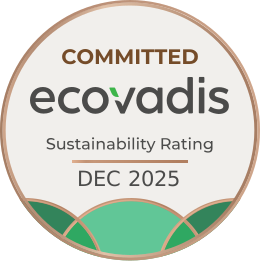
Governance commitment: by 2030, achieve EcoVadis Gold certification and improve extra-financial performance ratings.
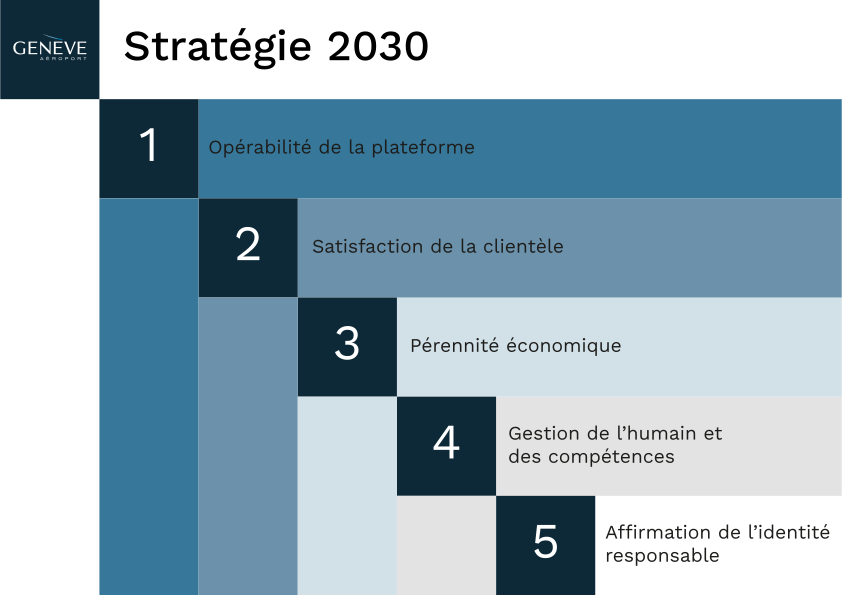
To guide its sustainability commitments, Genève Aéroport’s Board of Directors adopted a Vision 2040. In 2022, it also approved a 2030 strategy.
The Board relies on a robust tool: a double materiality assessment conducted in 2025. This approach highlights major impacts on climate, noise and passenger service quality. It identifies climate resilience, sustainable governance, the value chain and relations with neighbouring communities as key priorities.
Our commitments are defined through strategies and policies approved by the Executive Board and published on our website.
From the Board of Directors to the ESG Committee launched in 2024, and through our network of ambassadors, sustainability is represented at every level of our governance structure.

Our “Responsible Procurement Charter” is systematically integrated into all supplier contracts. Suppliers commit to complying with it, as do their own suppliers and subcontractors.

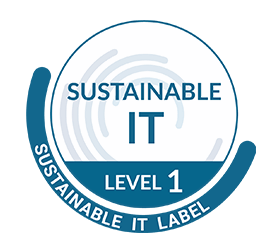
We aim to obtain the Sustainable IT label – Level 2 by 2028. This label is based on concrete actions, such as reducing the carbon footprint of our IT infrastructure.

We support sport, culture and the regional economy through long-term partnerships. In total, 21 organisations and events were supported, for a total contribution of CHF 578,000 (CHF 430,000 in 2024).

Each year, we publish our sustainability report, which serves as our non-financial performance statement. It is audited by an external body and published in March following approval by the Board of Directors. In 2025, it was integrated for the first time into a global report covering management, sustainability and finance.
The report is based on all ESG data collected throughout the year using our “Reporting 21” management tool, implemented in 2025.
Our ESG performance is assessed by various organisations, including rating agencies and other external bodies.
Supplier origins (in %)
Supplier origin data is part of the ESG information collected throughout the year using our “Reporting 21” management tool.
Sustainability unit